
(This is reproduced from the posting I made on my Facebook Page on 16th October 2026.)
I used to think RM100 was a lot of money.
Now I sign cheques with six or seven zeros on a regular basis and still flinch at the rising prices of my favorite fried kueh tiaw and iced teh C.
Let me explain.
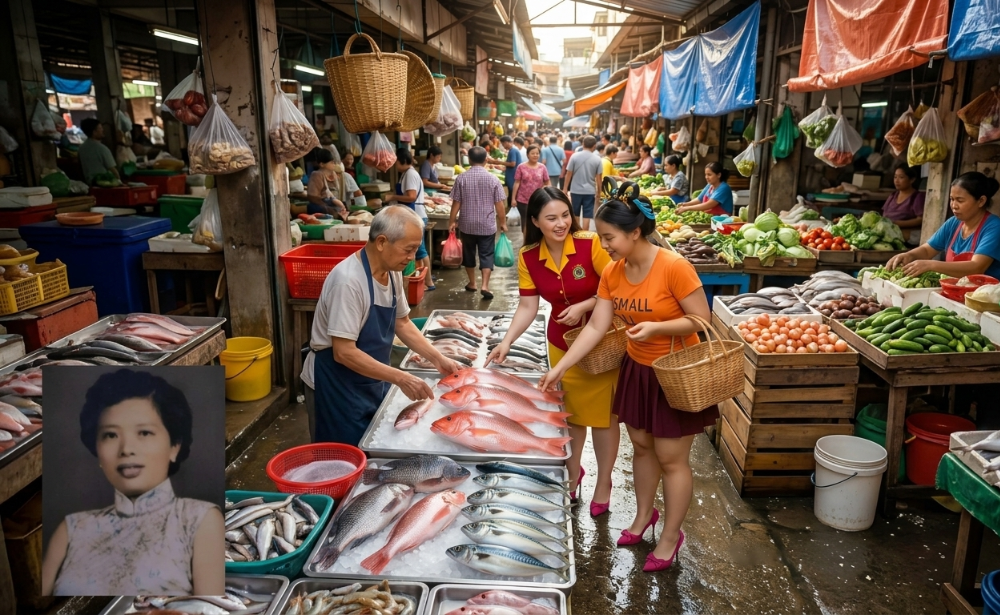
When I was a boy in Sibu, after moving there from our village Engkilo on the bank of Rejang River, my late mother (pic inserted) would go to the wet market to buy the family’s necessities for the week. She had a few RM10 ringgit notes, folded small in her palm. She came home with fish, vegetables, sometimes even chicken, and somehow would have a bit of cash left over.
I never asked how. Children don’t.
Last week, I read that a RM100 basket nowadays buys a family far less than it did. The same RM100, but a much lighter bag.
Here’s the thing about inflation. It never announces itself. It just removes one item at a time from the bag, quietly, and hopes you won’t notice.
I know during her time, my late mother noticed. She always did.
She’d stand at the fish stall and do the sums in her head faster than any Excel sheet I’ve ever seen. I remember accompanying her a few times and I heard her say in Foochow when told the price: “Too expensive, we won’t eat fish this week” and walk away from the stall.
I used to think that was stubbornness. Today I run a group of companies in diversified industries, with deals and transactions occurring as a normal course of business. And I now think it was strategy.
She taught me the best business lesson I ever had: the price on the tag is not the price you must pay.
Walk away. Substitute. Wait. Negotiate. Waste nothing.
So when people ask me how to survive a high-cost economy, I don’t quote economists or financiers. I just remember a woman, a few folded red ringgit notes in her sweaty hand, and a fish she refused to buy.
RM100 hasn’t changed. We just have to become as smart as our mothers.